Organic Maps for Travel: Offline Navigation Without Excessive Location Tracking
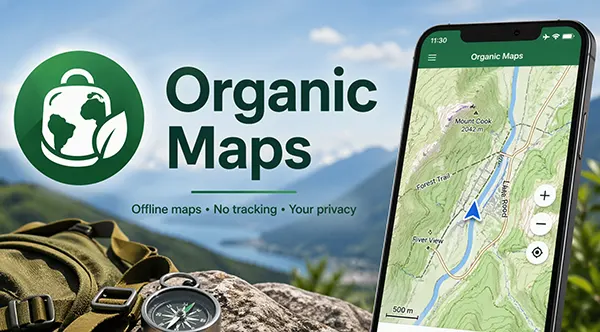
For travellers who value both independence and digital privacy, navigation tools have become a critical part of planning and moving through unfamiliar places. Organic Maps stands out as a solution built around offline functionality and minimal data collection. Unlike many mainstream navigation apps, it allows users to explore cities, hiking routes, and remote regions without constant internet access or background tracking, which is increasingly relevant in 2026 as concerns around personal data continue to grow.
How Organic Maps Works Without Internet Access
Organic Maps is built on open-source mapping data, primarily sourced from OpenStreetMap, which is continuously updated by a global community. Before travelling, users download maps for specific regions directly onto their device. Once stored locally, these maps allow full navigation, including route planning, search, and point-of-interest discovery, without requiring a mobile connection.
This offline approach is particularly useful in areas with limited connectivity, such as mountainous regions, rural landscapes, or international destinations where roaming costs remain high. The app calculates routes in real time using the stored data, ensuring that users are not dependent on external servers for basic navigation tasks.
Another important aspect is efficiency. Organic Maps is optimised for low battery consumption and lightweight performance, which makes it suitable even for older smartphones. This technical design ensures that travellers can rely on the application during long trips without frequent charging or performance slowdowns.
Accuracy and Map Coverage in Real Conditions
The accuracy of Organic Maps depends heavily on the quality of OpenStreetMap data in a given region. In major cities across Europe, North America, and parts of Asia, coverage is often highly detailed, including pedestrian paths, cycling routes, and local landmarks. This makes the app particularly useful for urban exploration and short-distance navigation.
In less populated regions, the level of detail can vary. However, the open nature of the mapping system means that updates are frequent, and users themselves can contribute corrections. This collaborative model has proven effective over time, especially in areas where commercial mapping services may lack detailed information.
For hikers and outdoor enthusiasts, Organic Maps offers an advantage by including trails, elevation data, and natural features that are sometimes missing in traditional navigation apps. This makes it a practical tool for planning routes beyond standard road networks.
Privacy-Focused Design and Data Protection
One of the defining features of Organic Maps is its strict approach to user privacy. The app does not track location data, does not require account registration, and avoids collecting personal information. In contrast to many alternatives, there are no background analytics or behavioural tracking mechanisms embedded within the application.
This design reflects a broader shift in user expectations by 2026, where awareness of data usage has increased significantly. Travellers are no longer willing to exchange detailed location histories for basic functionality, especially when viable alternatives exist. Organic Maps addresses this concern by operating entirely on-device, ensuring that navigation data remains private.
Additionally, the absence of advertising networks within the app eliminates another common source of data collection. This results in a cleaner interface and a more predictable user experience, free from targeted content or interruptions.
Why Privacy Matters for Travellers in 2026
Modern travel often involves crossing multiple digital ecosystems, from airports and hotels to local services and public transport systems. Each interaction has the potential to generate data trails, making privacy a practical concern rather than a theoretical one. Navigation apps are particularly sensitive, as they can reveal detailed movement patterns.
Organic Maps reduces this exposure by ensuring that route planning and location searches remain confined to the device. This is especially relevant for journalists, business travellers, and individuals visiting regions with stricter data monitoring practices.
Even for casual tourists, limiting unnecessary data sharing helps reduce the risk of profiling or misuse. As regulations evolve globally, tools that prioritise user control over information are becoming a preferred choice rather than a niche option.
Practical Use Cases for Different Types of Travel
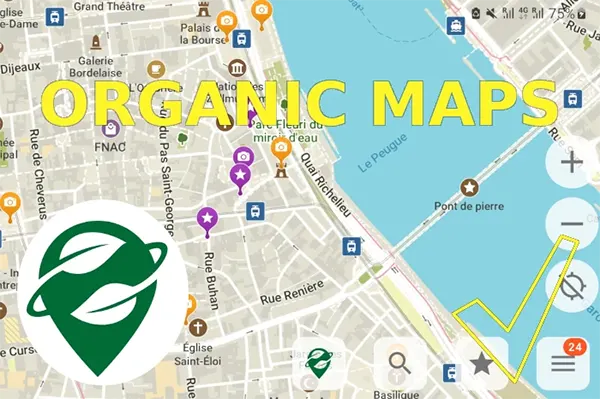
Organic Maps is not limited to a single travel scenario. It performs reliably across city breaks, road trips, and outdoor expeditions. For urban travellers, the app provides clear walking routes, public transport stops, and nearby services such as restaurants, pharmacies, and accommodation options.
During long-distance travel, especially across borders, offline maps remove the dependency on mobile networks. This is particularly useful when switching SIM cards or dealing with unstable connections. The ability to search addresses and navigate without interruptions simplifies logistics considerably.
For adventure travel, including hiking and cycling, Organic Maps offers route visibility that extends beyond standard roads. Users can plan journeys through forests, national parks, and coastal areas with confidence, relying on detailed path information stored directly on their device.
Limitations and Considerations Before Use
Despite its advantages, Organic Maps is not a universal replacement for all navigation needs. Real-time traffic updates, which rely on live data, are not available in offline mode. This means that drivers in busy urban areas may not receive the same level of congestion awareness as with online services.
Another consideration is the need to download maps in advance. Forgetting to do so can limit functionality when connectivity is unavailable. However, this is a manageable trade-off, especially with proper preparation before travel.
Finally, while the app interface is intentionally simple, users accustomed to feature-rich commercial applications may require a short adjustment period. Once familiar, the streamlined design often becomes an advantage rather than a limitation.